Before you go
Bahamas Entry Requirements 2026: Passports and Paperwork

Bahamas entry requirements are a shorter list than most travelers expect — no visa for the majority of nationalities, and no online form to file before you fly. What catches people out is smaller than that: a passport that’s valid, but not valid enough; a card that works for a cruise and not a flight; a paper form handed out on the plane that’s quietly being replaced. Shaped by years of questions and answers swapped inside our community, here’s what the border actually asks for, what changed in 2026, and the handful of places people get tripped up.
In this guide:
- Bahamas entry requirements, in one list
- The passport rule most people get wrong
- The arrival card, and the digital one replacing it
- Do you need a visa?
- What you can bring in without paying duty
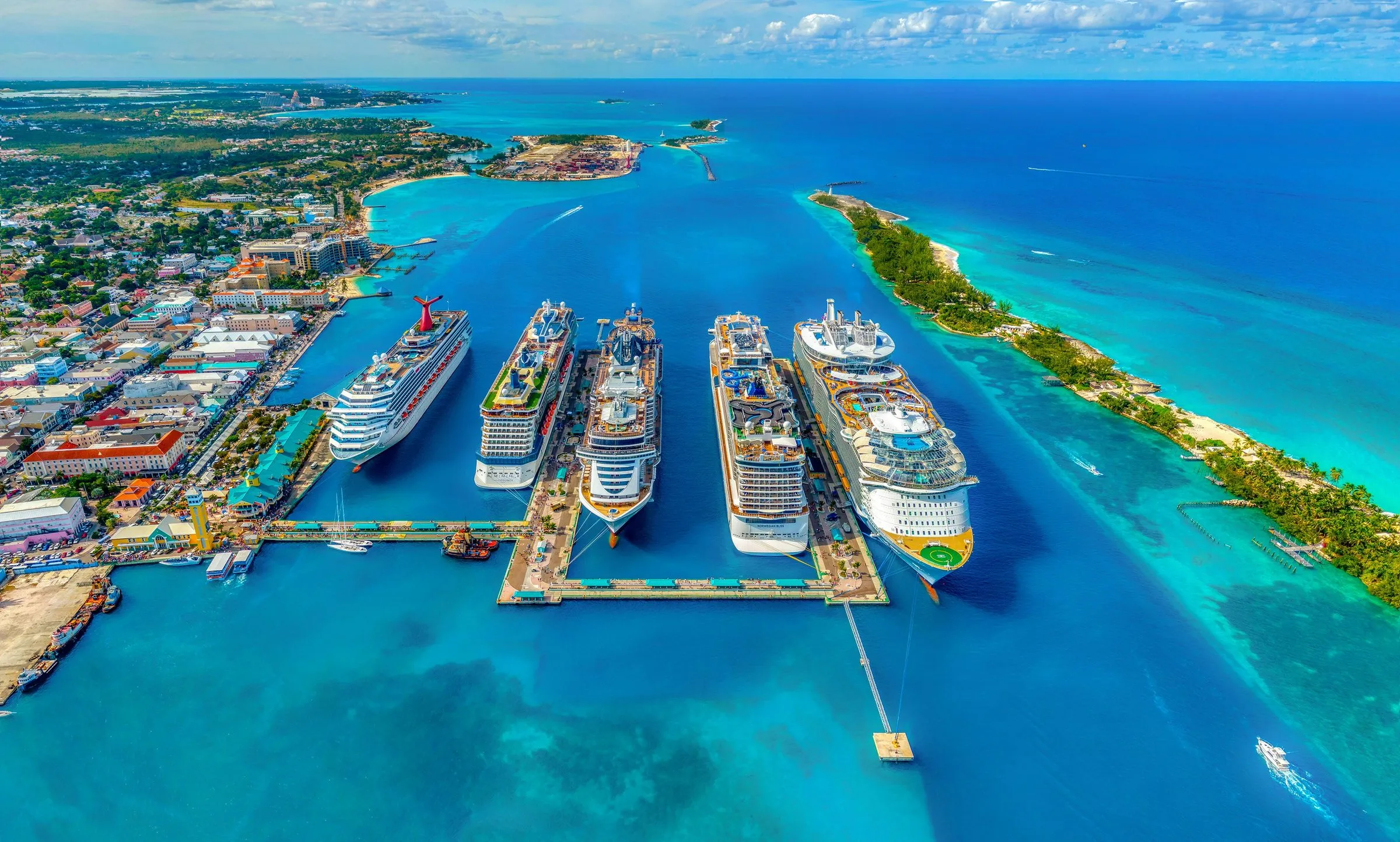
- Arriving by cruise ship or private boat
- Departure tax and US pre-clearance on the way home
Bahamas entry requirements, in one list
Every traveler who isn’t a citizen or resident has to satisfy the same set of criteria at the border, and the Bahamas Immigration Department publishes them plainly. You need:
- A passport valid for at least six months. Passport cards are not accepted.
- A return ticket, or some other proven way of leaving the country.
- The financial means to support yourself while you’re there — or a local sponsor who’ll receive you.
- No intention of taking paid work during your stay.
- A completed Immigration Disembarkation/Embarkation Card.
Two things worth knowing about how that’s actually assessed. First, it’s a short interview, not a document scan, and meeting every criterion still doesn’t make admission automatic — officers can refuse entry at their discretion. Second, overstaying is a punishable offence, and if you want longer than the period you were granted, the extension has to be applied for before that period expires, not after.
One health requirement also applies, though it catches very few visitors from North America or Europe: proof of yellow fever vaccination is required if you’re arriving directly from — or transiting more than 12 hours through — a country with yellow fever transmission risk, and the shot has to be at least 10 days old to count.
The passport rule most people get wrong
Six months. Not “valid through your trip,” not “valid on the day you fly home” — the Bahamas asks for at least six months of remaining validity, and that’s the rule that quietly strands people at the check-in desk before they ever reach a Bahamian immigration officer. If your passport expires within six months of your travel dates, renew it before you book anything you can’t change.
The second half of that rule is the one that surprises US travelers: passport cards are not accepted. A card is fine for re-entering the US at a seaport, which is why it works for cruises, but it isn’t a valid document for entering the Bahamas by air. For a flight, bring the book.
That applies to everyone in your party, including children — the six-month passport rule is written for all persons entering the country, not just adults. The birth-certificate shortcut you may have used for a cruise doesn’t transfer to a flight.
The arrival card, and the digital one replacing it
The Immigration Disembarkation/Embarkation Card is the small paper form cabin crew hand out before landing. Fill it in before you reach the desk; the officer keeps part of it and returns the rest to you, which you hand back to the airline agent at check-in when you leave. It’s worth not losing — tuck it into your passport rather than a pocket.
That system is now being replaced, slowly. In May 2026 the Ministry of Tourism, Investments & Aviation launched a pilot of the Bahamas Digital Arrival Card, a single online form that covers both the immigration card and the customs declaration, submitted before you fly. It follows amendments to the Immigration Act that gave digital entry documents a legal basis, and it’s the first time the country has moved off paper.
The important caveat for anyone traveling now: it’s a soft launch offered on selected flights only, and the paper process runs alongside it. Unless your airline tells you otherwise, expect a paper card onboard. There’s also no public portal open to all travelers yet, which is worth knowing because third-party sites will happily charge you a “processing fee” for a form that doesn’t exist for your flight.
Do you need a visa?
Probably not. The Bahamas waives visa requirements for citizens of a long list of countries — the US, Canada, the UK, the EU and most of Europe, Australia, New Zealand, Japan, South Korea, and most of Latin America and the Caribbean among them — for visits of up to three or eight months depending on the specific agreement.
A shorter list does require a visa in advance, including India, the Philippines, Thailand, Vietnam, Indonesia, Egypt, Morocco, Ukraine, Serbia, and the Dominican Republic. Those are issued only ahead of travel, through the Ministry of Foreign Affairs and its consular missions — turning up at the border without one means being refused entry, not being issued something on arrival.
Two details that get missed: the length of stay a waiver covers varies by country, so anyone planning to be in the Bahamas for more than 90 days should check their own terms specifically rather than assuming. And if you’re on a longer, work-from-anywhere kind of stay, the rules about not taking paid work locally still apply — our workation guide covers what that looks like in practice.
What you can bring in without paying duty
Your own clothes, gear and personal effects come in free. Beyond that, Bahamas Customs gives visitors a $100 exemption per trip on other goods, and every adult traveler — visitor or resident — additionally gets:
- One quart of spirits and one quart of wine
- Tobacco up to one pound in weight, or 200 cigarettes, or 50 cigars
Exemptions only apply to accompanied baggage, meaning things you physically travel with. Shipping a box ahead of yourself doesn’t qualify, and nobody can claim an exemption on your behalf.
Food is the one to pay attention to if you’re self-catering in a rental, which is most people reading this. Bringing groceries is a genuinely sensible move on the Out Islands, where imported food is a real line item in a trip budget — but all food has to be declared, and fruit, vegetables and plants need a permit from the Department of Agriculture in advance. Undeclared food can be seized and fined, and that applies to the bag of produce someone threw in at the last minute too.
The declaration itself is a C17 Accompanied Baggage form. If you’re carrying nothing but used personal belongings, an oral declaration to the officer is enough; if you have goods to declare, you can file the C17 and even prepay duty in advance through Exempt, the government-authorized app, and use its dedicated lane on arrival.
Arriving by cruise ship or private boat
Cruise passengers play by a different set of rules, and this is where the passport question gets genuinely confusing. Under US Customs and Border Protection’s closed-loop provision, US citizens on a cruise that begins and ends at the same US port can re-enter the United States with a government-issued birth certificate and a physical government-issued photo ID; children under 16 need only proof of citizenship.
That’s a rule about getting back into the US, though, not about what the Bahamas asks for — and individual cruise lines set stricter requirements of their own. The practical move is to bring the passport book anyway, because the closed-loop exception only covers the sea crossing. If a medical issue or a missed sailing means flying home instead of sailing back, air travel puts you under the ordinary passport rule and a birth certificate won’t get you on the plane. If your Bahamas stop is a single day in Nassau, our cruise port day guide covers what to actually do with the hours ashore.
Arriving on your own boat works differently again: you complete an Inward Passenger and Crew Manifest covering everyone aboard, and pleasure vessels carrying more than three non-resident passengers aged six or over are liable for a per-vessel departure tax. Bahamas Customs publishes the current figures on its departures page.
Departure tax and US pre-clearance on the way home
There’s a departure tax, but for anyone on a commercial ticket it’s already paid — it’s collected by the carrier and built into the fare you booked, so there’s no counter to visit and no cash to have ready at the airport. Cruise passengers and private boaters are the exception, and the current rates for both are on that same Customs departures page.
The thing actually worth planning around is US pre-clearance. Flights to the United States out of Nassau and Grand Bahama clear US Customs and Immigration before departure, which is a pleasant surprise on landing — you arrive in the US as a domestic passenger, with no immigration queue at the other end — and a genuinely bad surprise at the airport if you didn’t budget time for it. You’re clearing two countries’ formalities before you board, so allow noticeably more time than a normal international departure.
Two last things for the way out: hand back your immigration card stub at check-in, and declare cash or negotiable instruments if you’re carrying the equivalent of BS$10,000 or more. Penalties for not declaring run to forfeiting the money, plus a fine of up to $2,000 on top of it.
None of this is difficult — it’s a ten-minute job once you know which ten minutes matter, and the passport validity check is the only piece with a real lead time. Do that one now, and leave the rest for the week before you fly. Our planning guide covers the rest of the pre-trip list, and getting around picks up where this leaves off, once you’re through the airport and figuring out how to reach your island.
The one part of the border conversation worth preparing for is where you’re staying: having a confirmed booking and its address on your phone turns that question into a five-second answer. If you’re still comparing bases, current hotel and rental pricing across the islands is a quick way to see what your dates cost, and our free rental checklist covers the questions worth asking a host before you send a deposit.
This post contains affiliate links. If you book through one, we may earn a small commission at no extra cost to you — it helps us keep this guide (and our Bahamas rental community) running.
The Unpack Bahamas team
Trip notes and neighborhood guides drawn from a 12,000-member Bahamas rental community.